
Gold has been seducing people into its deceptive lure for millennia.
During periods of increased risk and uncertainty, an investment strategy that prioritises wealth preservation over wealth creation seems most appropriate. Gold, government bonds, defensive stocks, and cash are usual avenues for wealth preservation. However, the effectiveness of these assets at preserving wealth during the current market downturn is ambiguous.
Consider defensive stocks. Usually, defensive sectors provide a safe ground for investors during market downturns, as their fortunes are less reliant on the vagaries of economic cycles. However, the leading defensive sectors, such as the FMCG and pharma, were greatly hampered during the current market correction.
The US government bond, considered the world’s safest asset, to which investors usually hasten during heightened uncertainty, have declined this year.
We hold cash in any of the prevailing official currencies. The US dollar is the world’s reserve currency. 60 per cent of global trade is denominated in US dollars, and the US is the world’s largest economy. Because of these, the US dollar is considered a haven for global money; its value usually rises during periods of increased uncertainty. But the US dollar has also declined against a basket of major currencies this year. Indian rupee has depreciated by 2.25 per cent against US dollar over the past year.
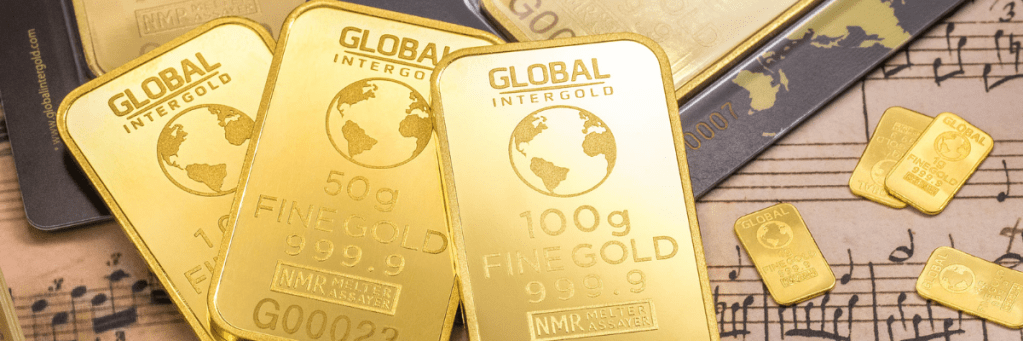
Gold is the only asset that has delivered on its promise as a safe asset. Gold prices rose 32 per cent in 2024 and are up 27 per cent for the first four months of 2025. Cumulatively, the gold price has increased 68 per cent over the past sixteen months, an average monthly return of 3.28 per cent. Such rapid price gains are very unusual, considering that historically gold has delivered an average annual return of 8 per cent (monthly returns of 0.65 per cent).
There was another occasion over the past decade during which gold prices increased rapidly. Gold prices increased by 66 per cent in the twenty-four months between September 2018 and September 2020 – an average monthly return of 2.13 per cent. However, seventeen months into the rally and after a 35 per cent gain, we faced a global economic crisis precipitated by the Covid-19 pandemic, unleashing severe economic damages: global financial markets crashed; the unemployment rate in developed countries spiked to double digits; global economic output plummeted.
A gold price rally could also be traced to the global financial crisis (2008). Gold prices gained 51 per cent, a monthly return of 6 per cent, during the seven months between August 2007 and March 2008, coinciding with the onset of the global financial crisis.
However, a gold price rally didn’t precede every major economic shock of the past three decades. Around two years before the 2008 global financial crisis, there was a gold price rally between September 2005 and May 2006, when prices rose 55 per cent. There were no significant economic shocks then, but the rally ended badly, with prices dropping 21 per cent in less than one month, soon after peaking in May 2006.
There was no gold price rally preceding the dot-com bubble burst (2000), another major economic shock of the past twenty-five years. Instead, gold prices were in long-term decline going into the crisis, declining 36 per cent between January 1996 and August 1999. Gold prices spiked 21 per cent in September 1999, but gave up half of the gains within three months and the entire gains within eighteen months.
Gold price rallies are not always ominous. They have rallied during good economic times, too. They rallied 60 per cent during the three years between January 2001 and January 2004, averaging a monthly return of 1.31 per cent. Although the returns were double their long-term average returns, they couldn’t be considered rapid price rises (as a rule of thumb, we consider only average monthly returns exceeding 2 per cent as rapid price rises).
Gold prices have increased during the economic recovery from the global financial crisis. It gained 94 per cent, an average monthly return of 2.4 per cent, during the 28 months between April 2009 and August 2011.
So far, we have considered only episodes of rapid rise in gold prices and their economic significance over the past twenty-five years. However, it would be instructive to consider how these rallies ended or what happened after gold prices peaked.
After peaking at $680 per ounce in September 1980, gold prices declined by 50 per cent in the next twenty months. It took gold twenty-seven years to regain those peaks.
The next major gold price rally began in 2005 and lasted six years; the gold price increased from $435 per ounce in 2005 to $1,800 per ounce in 2011. The rally was shortly disrupted when gold prices declined 25 per cent from $975 to $720 per ounce over seven months in 2008. It soon recovered from the fall and rallied over the next three years, finally peaking at $1,800 per ounce in September 2011. However, gold prices declined 35 per cent from the peak over the next four years. It took gold eight years to regain the September 2011 peaks.
The current gold price rally began in October 2023. Gold was trading at $2,000 per ounce then. It rallied throughout 2024 and for the first four months of 2025, and today it trades at $3,260 per ounce.
The leading insight from tracking gold price movements over the past few decades is that gold prices follow a pattern. First, there is a price rally, the cause of which is obscure. Also, how much and how long the prices will rally is unknowable beforehand. However, the rally will eventually peak after some time. Again, when it will peak is unknowable too. After the peak comes a sell-off: what causes the sell-off and the extent and duration of the sell-off remain inscrutable. After the sell-off arrives a period of hibernation during which gold prices remain unchanged, which could last as short as six years (2013 – 2019) or as long as twenty-five years (1981 – 2006). Over the past fifty years, gold prices have hibernated for 70 per cent of the time.
Presumably, there are two reasons for gold prices to rally and their subsequent sell-off: changing economic uncertainty and interest rates. Geopolitical tensions, inflation, or trade war – any of these factors could lead to an increase in economic uncertainty. The rising intensity of each factor and the arrival of new factors could escalate the economic uncertainty. Due to its historical reputation as a store of value, investors buy gold during these harsh times as a reliable way to preserve their wealth.
As interest rates decline, the return from conventional asset classes declines, increasing gold’s attractiveness relative to those assets. So, investors increasingly purchase gold during periods of declining interest rates. They buy rapidly during periods of sharply declining interest rates, triggering a price rally. Periods of sharply declining interest rates usually occur when the increasing economic uncertainty escalates and culminates in an economic crisis, as central banks reduce policy interest rates to support and stimulate the economy.
However, economic crisis is not a prerequisite for interest rates to decline sharply; sharply declining interest rates could also happen without an economic crisis. Central banks may reduce interest rates pre-emptively if they expect an economic downturn ahead.
On most occasions, increasing economic uncertainty and declining interest rates do not happen simultaneously; instead, they happen sequentially, one after the other: the increasing economic uncertainty escalates and culminates in a crisis; interest rates are reduced thereafter as a policy response. However, although rarely, when these two factors are present simultaneously, they impose a much greater upward thrust on gold prices.
We had our last major economic crisis five years ago (2020), precipitated by the COVID-19 pandemic. Since 2022, economic uncertainty has been increasing consequent to a series of negative events: a sharp increase in global interest rates in 2022 and 2023, Russia’s invasion of Ukraine in 2022, Israel–Hamas conflict in 2023, and most recently, the Trump administration’s imposition of trade tariffs disrupting the global trade order.
Since the second half of 2024, central banks in major economies have been reducing interest rates pre-emptively, particularly in Europe. So, we have had the two likely ingredients of a gold price rally simultaneously for more than a year. That could explain, to a certain extent, the gold price rally since October 2023.
Gold prices may keep rising if the increasing economic uncertainty and declining interest rates continue. But the prices will peak sooner or later, and a sell-off will follow. This could happen when economic uncertainty ceases to increase or begins to deescalate. It could also occur when interest rates cease to decline or start to rise. The sell-off would be sharper if both conditions happened simultaneously.
Subscribe
Enter your email below to receive our latest content in your Inbox.
 AMN CAPITAL