

Speculators aren’t the perpetrators of market manias or panics. These things happen when society has lost its way, when self-interest gains upper hand over collective good.
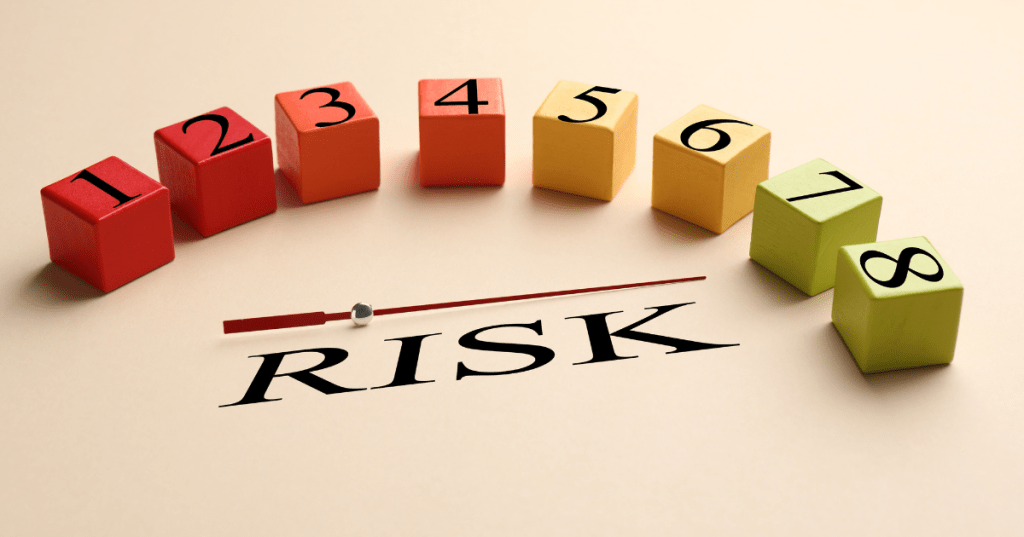
The stock market is one of the central pillars of the capitalist economy, allowing companies to raise capital, which they invest in building capabilities to meet society’s existing and emerging needs. However, more than ninety-five per cent of what happens in the stock market on any given day has nothing to do with this purported societal purpose. Instead, it is pure speculation – the effort to make big gains in a short time by anticipating future price movements. The people who engage in it are called speculators. Since the origin of the modern stock market in the 2nd half of the 17th century, speculation and speculators have always been viewed as malign to the economy and society. Their virulent motive of quick profits is believed to cause market instability and financial misfortunes.
However, despite the general antagonism towards them, speculators impart an essential characteristic to the stock market that enables it to perform its purpose effectively and efficiently. Speculators provide market liquidity, enabling the rapid, simultaneous buying and selling of multiple shares without causing significant price fluctuations. This liquidity is what enables the stock market to attract the kind of capital and people it does today. Moreover, by interpreting and acting on new information, speculators incorporate it into market prices, thereby enhancing market efficiency.
Unfortunately, history has been too harsh on speculators, assigning undue blame to them whenever something goes wrong in the market. Their productive role in the effective functioning of the financial markets goes largely unrecognised. Any system concerned with money and profit contains fraudsters, price manipulators, swindlers, and rumour-mongers. Associating speculators with such nefarious characters does an injustice to a class of people who play an important role in making this wonderful system of capital allocation work.
The issue that has given speculation a bad reputation is that it sometimes escalates into a frenzy that, sooner or later, ends in disaster. This usually occurs during periods of economic prosperity and optimism, when capital is cheap and readily available. A speculative frenzy is characterised by rapidly rising stock prices that are largely decoupled from their underlying fundamentals. Rapid price rises always attract public attention; driven by greed and euphoria, many people are drawn into the frenzy. Unfortunately, every such frenzy has eventually ended in disaster, mostly with a crash. Most of the capital that flows into the market following a speculative frenzy is lost in the eventual market crash. Some of these market crashes can escalate into an economic crisis. This depends on who gets sucked into the speculative frenzy. Typically, a market crash precipitates an economic crisis when one or more of the major economic institutions, such as businesspeople, merchants, companies, banks, or other major financial institutions, are active participants in the frenzy.
Nevertheless, once the frenzy ends, losses mount and companies fail. When the dust finally settles, the blame for the financial ruin and economic hardship typically falls first on the speculator for precipitating the crisis, then on the regulators for failing to supervise and control reckless speculation. Measures to control and restrain speculative activities usually follow a panic or crisis. However, the proclivity to anticipate the future and trade on it is so deeply ingrained in humans that no amount of regulation has been able to restrain it fully. Speculation and speculators always find another way to continue their risk-taking-for-quick-profit activity.
The root cause of a speculative frenzy and its eventual harmful consequences does not lie with speculators. It lies within all of us and is triggered in specific conducive moments, causing us to dispense with reason and become credulous to any promise of extreme wealth. In those moments when our gambling instincts override reason and self-control, we are oblivious to the cost and risk of the bet and instead are more concerned with the potential ego boost and monetary gains from winning. There are several stories – real and fictional – in which people lost in days what they had gained or built over several years. [In the Mahabharata, Yudhishthira loses his kingdom, brothers, and wife to gambling.] Gambling is betting on a created risk, such as a game or race, while speculation is betting on an existing risk – the risk endured in the normal functioning of a capitalist economy. However, the underlying human instinct to engage in both is the same.
When do those conducive moments arise when the gambling instinct dominates and becomes prevalent in society? The priority of an effectively functioning society must be the common good. At times, this priority is superseded by self-interest and the pursuit of money. The transition to a self-interest-dominant society begins when a few individuals achieve financial success through unscrupulous means. Their success disorients society, causing a shift in values. Previously condemned vices, such as the pursuit of wealth and self-interest, are seen in a favourable light. Ideologies that tout the benefits of self-interest and the pursuit of wealth are developed and gain widespread approval. One adverse consequence of the capitalist system is the economic inequality it engenders. What better way to correct this inequality than speculation, which promises easily accessible opportunities for extreme gains with small capital in a short time to anyone?
For a long time, in most parts of the world, people have had a negative perception of speculators and their role in the financial system. In earlier times, before the advent of the modern stock market, there were futures markets in agricultural commodities. Then and now, farmers face the risk that the price of their produce at harvest might vary greatly from that at sowing, potentially resulting in losses. Futures contracts help farmers hedge this risk by allowing them to lock in the selling price of their produce in advance, thereby providing essential clarity to plan and proceed with sowing. The party on the other end of the contract, who assumes the price risk, is the speculator.
A speculator is neither the delusive pursuer of short-term gains nor the one who employs unscrupulous methods in pursuit of money. Instead, in short, a speculator is the bearer of risk. He is the person willing to take on the risks inherent in the normal functioning of a market-based capitalist society. If there were no such person to take on those risks, the multitude of economic transactions that underlie the present-day economy would not take place. He is compensated for performing his role in the economy through the gains he earns when he gets his bets right.
Pursuit of profit through change in price of stocks, bonds, or properties isn’t the primary objective of a speculator. His primary objective is to assess the risks inherent in assets, events, or situations and to bear those risks where the odds are likely to be in his favour. A risk-bearer should be cognizant of the risk he takes on. Risk is the possibility of losing money when things don’t work out as planned or expected. Therefore, assessing risk is basically assessing the expectation discounted into an asset or future event. The speculator then estimates the probability that the discounted expectation will be met, exceeded, or not met. He makes or avoids bets based on these estimates.
During a market panic, stock prices fall rapidly, but they never fall to zero. They eventually find support at some level. It is the level at which someone is willing to take on the risk despite the extreme fear and trepidation. That someone here is the speculator. He didn’t fall for the delusion and madness that preceded the panic. Neither did he fall for the fear and pessimism the panic triggered.
Subscribe
Subscribe to receive our latest content in your Inbox.
